


 Envisioned
and built by the great and mighty king, Sawai Raja Jai Singh, the name
of the city 'Jaipur' has twofold emphasis. 'Jai' means conquest and is
also the first name of its maker. Today, the city is a foremost tourist
attraction in India because of its superlative forts, grandiose palaces,
vivacious temples, multicolored bazaars, pulsating streets and its
distinguished pink color to which the city owes its oft-used name 'The
Pink City'. This illustrious pink color symbolizes 'welcome' and was
embraced during the times of the ruler Ram Singh II when he expected the
Prince of Wales in 1876. The color was selected after several
experiments to cut down the severe glare from the reflection of the
glowing rays of the sun. Today, every home in the old city is obliged by
law to maintain this distinctiveness of the city. Throughout the old
city you can see the traditional, fabulous, pink-colored houses with
latticed windows lending charisma to a scene, which is almost miraculous
at sunset.
Envisioned
and built by the great and mighty king, Sawai Raja Jai Singh, the name
of the city 'Jaipur' has twofold emphasis. 'Jai' means conquest and is
also the first name of its maker. Today, the city is a foremost tourist
attraction in India because of its superlative forts, grandiose palaces,
vivacious temples, multicolored bazaars, pulsating streets and its
distinguished pink color to which the city owes its oft-used name 'The
Pink City'. This illustrious pink color symbolizes 'welcome' and was
embraced during the times of the ruler Ram Singh II when he expected the
Prince of Wales in 1876. The color was selected after several
experiments to cut down the severe glare from the reflection of the
glowing rays of the sun. Today, every home in the old city is obliged by
law to maintain this distinctiveness of the city. Throughout the old
city you can see the traditional, fabulous, pink-colored houses with
latticed windows lending charisma to a scene, which is almost miraculous
at sunset.Jaipur City, Pink City India, Travel to Jaipur India, Jaipur Tourism, Jaipur City Guide, Jaipur Tours, Tourism in Jaipur.
Golden Triangle India » Jaipur
Jaipur City
Envisioned
and built by the great and mighty king, Sawai Raja Jai Singh, the name
of the city 'Jaipur' has twofold emphasis. 'Jai' means conquest and is
also the first name of its maker. Today, the city is a foremost tourist
attraction in India because of its superlative forts, grandiose palaces,
vivacious temples, multicolored bazaars, pulsating streets and its
distinguished pink color to which the city owes its oft-used name 'The
Pink City'. This illustrious pink color symbolizes 'welcome' and was
embraced during the times of the ruler Ram Singh II when he expected the
Prince of Wales in 1876. The color was selected after several
experiments to cut down the severe glare from the reflection of the
glowing rays of the sun. Today, every home in the old city is obliged by
law to maintain this distinctiveness of the city. Throughout the old
city you can see the traditional, fabulous, pink-colored houses with
latticed windows lending charisma to a scene, which is almost miraculous
at sunset.| Location: | Situated in Rajasthan in North India, Jaipur is 259 km from Delhi and 232 km from Agra. |
| Significance: | Capital of Rajasthan State. |
| Climate: | Jaipur has hot and sultry summers and cold winters. The maximum temperature in summer is around 45oC. In winters, days are sunny and pleasant days but during nights, temperature can be as low as around 5oC. Hazy evenings are also part of the winters here. |
Shopping Attractions
 Jaipur
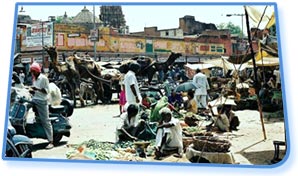
is well known all over the world for its gemstones master cutters,
polishers and gemstone dealers and also for its cut and polished
emeralds. A world leader in semi-precious stones and Kundan - Meena
jewellery, one can can also find good bargains for Lacquered Bangles,
Hand Block Printed Textiles, glazed Blue Pottery with its origin in
Persia, Tie & dye Fabrics (Bandhani/Bandhej), Stone Craft Marble and
sandstone articles and traditional miniature paintings in Jaipur.
Jaipur
is well known all over the world for its gemstones master cutters,
polishers and gemstone dealers and also for its cut and polished
emeralds. A world leader in semi-precious stones and Kundan - Meena
jewellery, one can can also find good bargains for Lacquered Bangles,
Hand Block Printed Textiles, glazed Blue Pottery with its origin in
Persia, Tie & dye Fabrics (Bandhani/Bandhej), Stone Craft Marble and
sandstone articles and traditional miniature paintings in Jaipur.
Prime Attractions
Amer Palace
Raja Man Singh erected Amer Palace in 16th century. It is an attention-grabbing mélange of Hindu and Mughal architecture. Jai Mandir, Sheesh Mahal, Sukh Niwas and Ganesh Pole are the focal areas of interest in the palace.
Hawa Mahal
Latticed windows and stone screens lend a supplementary fascination to the multi-layered palace of Hawa Mahal. Raja Sawai Pratap Singh (who was the grandson of Sawai Jai Singh and the son of Sawai Madho Singh) built it in 1799.
City Palace
Chandra Mahal, prevalently known as City Palace, is still the dwelling place of the royal family, at least, in part, while Maharaja Sawai Man Singh II Museum engages the ground floors and outer courtyards. The museum offers rare manuscripts, Mughal and Rajasthani miniature paintings, Mughal carpets, royal costumes and textiles and armory.
Nahargarh Fort
Formerly known as Sudarshan Garh, Nahargarh or the Tiger fort was put up in 1734 by Raja Jai Singh II. It was one of the first of the three forts built by the rulers of Jaipur and from here one can see the picturesque beauty of the Man Sagar Lake.
Jai Garh Fort
FJaigarh fort was built in 1726 by Raja Sawai Jai Singh and is analogous in its architectural style to the Amber Fort. It features the impressive Jaivana, the largest wheeled canon in the world along with a museum, three water tanks and eye-catching views of the city of Amber below.
Samode Palace (40-km North West)
The attractive Samode Palace has been restructured and refurbished and is now serving as one of the family run hotels that offer custom-made service and attention to detail. It is a wonderful example of the Rajput haveli structural design and offers a panoramic vision to its guests.
Jal Mahal
An 18th century pleasure palace, hovering over Mansagar Lake, Jal Mahal is noted for its convoluted design and magnificent structural design. Situated across the cenotaphs, there is a land bridge that leads one to the Jal Mahal Palace.
Government Central Museum
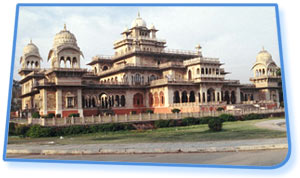
Conceived by Colonel Sir Swinton Jacob in 1876, Government Central museum or Albert Hall Museum is the oldest museum of the state. Located in the Ramnivas Gardens, it has Indo-Persian style of architecture. The museum has a wide range of domestic metal objects, miniature paintings from the Bundi, Kishangarh, Kota, Udaipur and Jaipur schools of painting, traditional ceremonial dress worn by royal families and samples of wood block printing.
Sisodia Rani Ka Bagh
Built by Sawai Jai Singh II for his Sisodia queen - the Sisodia Rani-ka-Bagh has fabulous tiered multilevel gardens, fountains, pools, some gorgeous pieces of sculpture and painted pavilions.
Vidyadhar's Garden
Built in the memory of Vidyadhar, the designer of the Pink City, it is situated 7 km east of Jaipur in a narrow valley enclosed by high hills. It has been remodeled recently and used to be the ex-vineyard of the royalty. This is a terraced garden with fountains, pool and other features of a decorous royal resort.
Jantar Mantar
The astonishing astronomical three-storey-high observatory was built between 1728 and 1734 based on the drafts of Maharaja Jai Singh II. Jantar-Mantar in Sanskrit means 'Magical Device'.
Elephant Festival
It is held in March or April every year on the propitious occasion of Holi, the celebration of colors. As the name suggests, dozens of elephants parade at the Chaugan stadium. The best-attired elephant is given a prize. Elephant Polo and cultural songs & dances are featured events in this festival.
Jaipur Festival is a fairly contemporary event that takes place in the month of November where innumerable of programs, competitions and felicitations are prearranged and are meant to revive old customs and traditions of the princely Jaipur. It closes on, November the 18th, which is supposed to be 'the birthday' of Jaipur.
How To Reach
Jaipur
is well known all over the world for its gemstones master cutters,
polishers and gemstone dealers and also for its cut and polished
emeralds. A world leader in semi-precious stones and Kundan - Meena
jewellery, one can can also find good bargains for Lacquered Bangles,
Hand Block Printed Textiles, glazed Blue Pottery with its origin in
Persia, Tie & dye Fabrics (Bandhani/Bandhej), Stone Craft Marble and
sandstone articles and traditional miniature paintings in Jaipur.Prime Attractions
Amer Palace
Raja Man Singh erected Amer Palace in 16th century. It is an attention-grabbing mélange of Hindu and Mughal architecture. Jai Mandir, Sheesh Mahal, Sukh Niwas and Ganesh Pole are the focal areas of interest in the palace.
Hawa Mahal
Latticed windows and stone screens lend a supplementary fascination to the multi-layered palace of Hawa Mahal. Raja Sawai Pratap Singh (who was the grandson of Sawai Jai Singh and the son of Sawai Madho Singh) built it in 1799.
City Palace
Chandra Mahal, prevalently known as City Palace, is still the dwelling place of the royal family, at least, in part, while Maharaja Sawai Man Singh II Museum engages the ground floors and outer courtyards. The museum offers rare manuscripts, Mughal and Rajasthani miniature paintings, Mughal carpets, royal costumes and textiles and armory.
Nahargarh Fort
Formerly known as Sudarshan Garh, Nahargarh or the Tiger fort was put up in 1734 by Raja Jai Singh II. It was one of the first of the three forts built by the rulers of Jaipur and from here one can see the picturesque beauty of the Man Sagar Lake.
Jai Garh Fort
FJaigarh fort was built in 1726 by Raja Sawai Jai Singh and is analogous in its architectural style to the Amber Fort. It features the impressive Jaivana, the largest wheeled canon in the world along with a museum, three water tanks and eye-catching views of the city of Amber below.
Samode Palace (40-km North West)
The attractive Samode Palace has been restructured and refurbished and is now serving as one of the family run hotels that offer custom-made service and attention to detail. It is a wonderful example of the Rajput haveli structural design and offers a panoramic vision to its guests.
Jal Mahal
An 18th century pleasure palace, hovering over Mansagar Lake, Jal Mahal is noted for its convoluted design and magnificent structural design. Situated across the cenotaphs, there is a land bridge that leads one to the Jal Mahal Palace.
Government Central Museum
Conceived by Colonel Sir Swinton Jacob in 1876, Government Central museum or Albert Hall Museum is the oldest museum of the state. Located in the Ramnivas Gardens, it has Indo-Persian style of architecture. The museum has a wide range of domestic metal objects, miniature paintings from the Bundi, Kishangarh, Kota, Udaipur and Jaipur schools of painting, traditional ceremonial dress worn by royal families and samples of wood block printing.
Sisodia Rani Ka Bagh
Built by Sawai Jai Singh II for his Sisodia queen - the Sisodia Rani-ka-Bagh has fabulous tiered multilevel gardens, fountains, pools, some gorgeous pieces of sculpture and painted pavilions.
Vidyadhar's Garden
Built in the memory of Vidyadhar, the designer of the Pink City, it is situated 7 km east of Jaipur in a narrow valley enclosed by high hills. It has been remodeled recently and used to be the ex-vineyard of the royalty. This is a terraced garden with fountains, pool and other features of a decorous royal resort.
Jantar Mantar
The astonishing astronomical three-storey-high observatory was built between 1728 and 1734 based on the drafts of Maharaja Jai Singh II. Jantar-Mantar in Sanskrit means 'Magical Device'.
Elephant Festival
It is held in March or April every year on the propitious occasion of Holi, the celebration of colors. As the name suggests, dozens of elephants parade at the Chaugan stadium. The best-attired elephant is given a prize. Elephant Polo and cultural songs & dances are featured events in this festival.
Jaipur Festival is a fairly contemporary event that takes place in the month of November where innumerable of programs, competitions and felicitations are prearranged and are meant to revive old customs and traditions of the princely Jaipur. It closes on, November the 18th, which is supposed to be 'the birthday' of Jaipur.
How To Reach
| By Air: | Jaipur has flights on a daily basis to and from Delhi and Mumbai. It is also well joined with Udaipur, Jodhpur, Ahmedabad, Jaisalmer, Aurangabad and Calcutta. The airport is not more than 20 km from the centre of the city. |
| By Train: | You can find a train to and from Jaipur from all the major cities of India. From Delhi, you can catch Shatabdi Express, Intercity Express, The Pink City Express and Chetak Express while the Super Fast Express links Jaipur with Mumbai. There are specialty trains like 'Palace On Wheels' and 'The Royal Orient' for a regal journey from Delhi. |
| By Road: | Jaipur being the capital of Rajasthan, one can find frequent deluxe and luxurious air-conditioned buses from Delhi, Agra, and all cities of Rajasthan to Jaipur. The central bus stand, Sindhi Camp, is situated in the heart of the city. |
Jaipur Hotels : Samode Palace - Jai Mahal Palace - Rajputana Palace Sheraton - Rambagh Palace - Trident Hilton


